The Timeless Allure of Natural Diamonds
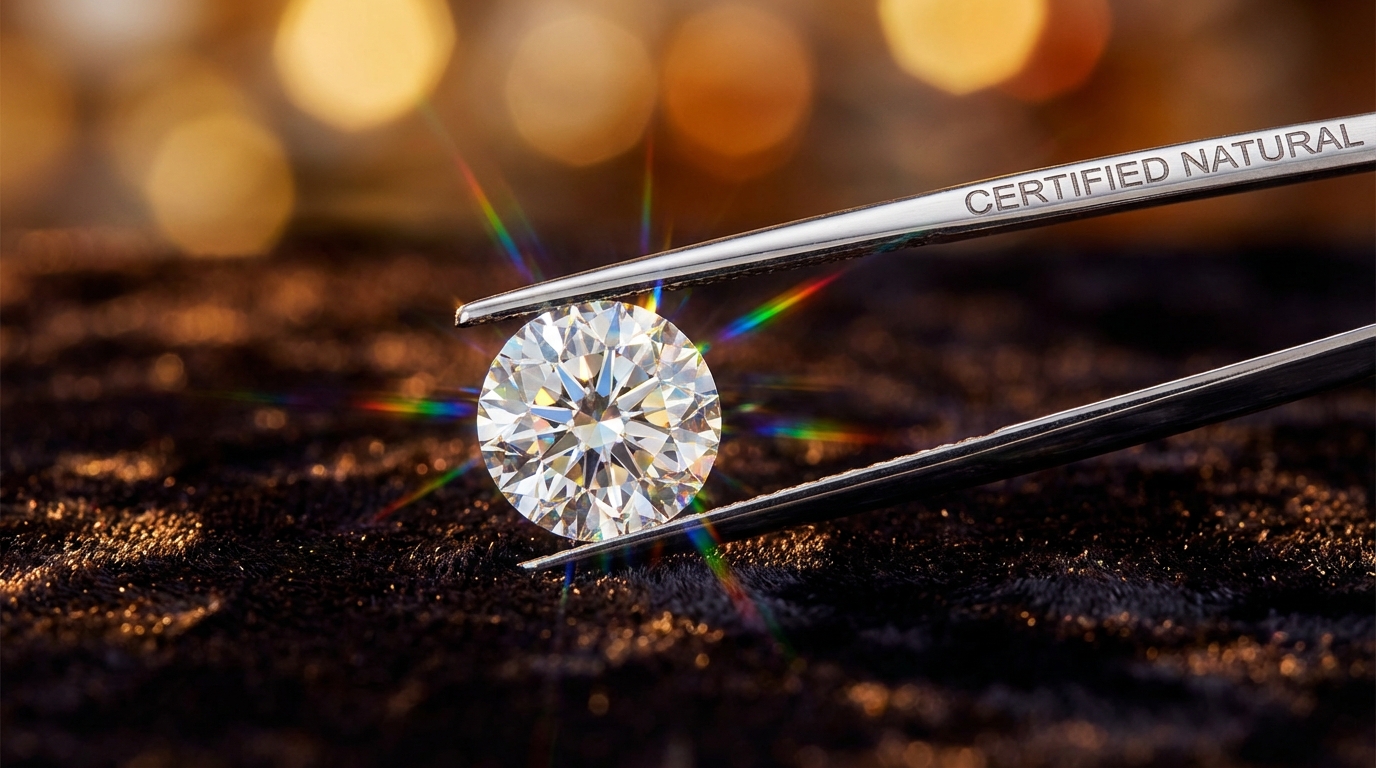
There's something extraordinary about holding a stone that was formed deep within the Earth over billions of years. Natural diamonds carry a story written in geological time — compressed carbon transformed by immense heat and pressure into one of the most brilliant materials on the planet.
At Shine & Bond, we've expanded our collection to include certified natural diamonds alongside our lab-grown options, because we believe every jewelry lover deserves the freedom to choose the stone that speaks to them.
What Makes a Natural Diamond "Natural"?
Natural diamonds are formed approximately 100 miles beneath the Earth's surface, where temperatures reach over 2,000 degrees Fahrenheit and pressure is roughly 725,000 pounds per square inch. Over billions of years, carbon atoms bond together in a crystal structure that creates the hardest natural material known.
These diamonds eventually make their way to the surface through volcanic eruptions, carried in formations called kimberlite pipes. Each natural diamond is a unique geological artifact — no two are exactly alike.
Understanding Diamond Certification
When you purchase a certified natural diamond, you're receiving a stone that has been independently evaluated by a gemological laboratory. The most respected certifications come from:
- GIA (Gemological Institute of America) — The gold standard in diamond grading
- IGI (International Gemological Institute) — Widely trusted for both natural and lab-grown diamonds
- AGS (American Gem Society) — Known for their rigorous cut grading
The 4 Cs of Diamond Quality
Every certified diamond is graded on four key characteristics:
Cut — How well the diamond has been shaped and faceted. Cut determines how much light the diamond reflects, directly affecting its sparkle and brilliance. This is often considered the most important C.
Color — Diamonds are graded on a scale from D (colorless) to Z (light yellow or brown). Colorless diamonds are the most rare and valuable, though near-colorless stones (G-H) offer exceptional beauty at a more accessible price.
Clarity — This measures the presence of internal inclusions or external blemishes. Grades range from FL (flawless) to I3 (included). Many inclusions are invisible to the naked eye, making VS and SI grades excellent choices.
Carat — The weight of the diamond. One carat equals 0.2 grams. While larger diamonds are more rare, the other three Cs significantly impact a diamond's beauty and value.
How to Read a Diamond Certificate
Your diamond certificate (also called a grading report) is essentially a blueprint of your stone. Here's what to look for:
- Report number — A unique identifier you can verify online with the issuing laboratory
- Shape and cutting style — Round brilliant, princess, oval, emerald, etc.
- Measurements — The diamond's physical dimensions in millimeters
- 4 Cs grades — Individual scores for cut, color, clarity, and carat weight
- Proportions diagram — Shows the diamond's angles and percentages
- Clarity plot — A map showing the location of any inclusions
Natural vs. Lab-Grown: Understanding Your Options
At Shine & Bond, we proudly offer both natural and lab-grown diamonds. Here's how they compare:
Natural diamonds are formed by nature over billions of years. Each stone is one-of-a-kind with its own unique characteristics. They carry inherent rarity and have historically held their value over time.
Lab-grown diamonds are created in controlled environments using advanced technology that replicates the natural formation process. They are chemically, physically, and optically identical to natural diamonds, and offer the same brilliance at a more accessible price point.
Both options are beautiful, ethical, and real. The choice comes down to what matters most to you — the romance of a billion-year-old stone, or the innovation of modern science creating the same result.
How to Choose the Right Diamond
When selecting a natural diamond for your Shine & Bond piece, consider these tips:
Set your priorities. Decide which of the 4 Cs matters most to you. If sparkle is paramount, prioritize cut. If size matters, you might opt for a slightly lower color or clarity grade to maximize carat weight.
Trust the certification. Always choose a certified stone from a reputable laboratory. The certificate gives you confidence in exactly what you're purchasing.
See it in person (or in high-quality imagery). Diamonds look different in various lighting conditions. Our team can help you understand how a specific stone will look in everyday wear.
Consider the setting. The metal and design of your jewelry piece can enhance or complement your diamond's characteristics. Our 14K gold settings in yellow, white, and rose gold each bring out different qualities in a stone.
Discover Certified Natural Diamonds at Shine & Bond
Whether you're drawn to the timeless romance of a natural diamond or the modern brilliance of a lab-grown stone, we're here to help you find your perfect piece. Every diamond in our collection is set in solid 14K gold and crafted with the same attention to detail that defines everything we create.
Ready to explore? Browse our collection or reach out to our team for personalized guidance.